

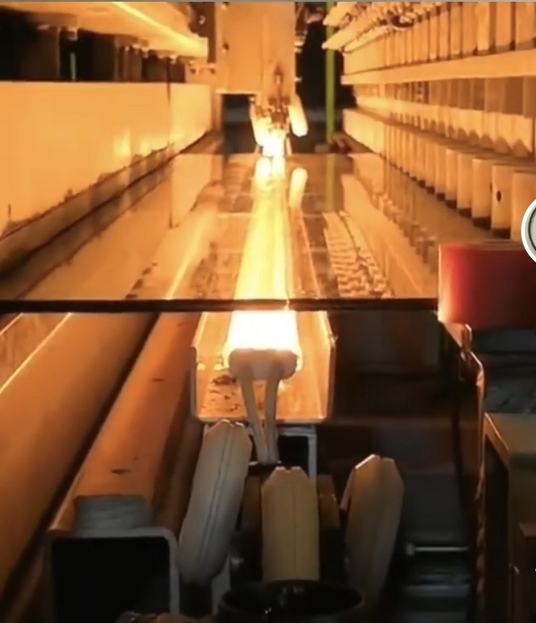
On an optical lens coating line, timing and temperature stability aren’t optional. If the dry cycle drags or drifts, you’re pushing the coating into stress, generating scrap, and killing throughput. We built our optical lens coating dryer to keep the process honest—fast, controlled heat that keeps pace with modern glass processing. Here’s what matters under the hood. The system uses near-infrared (NIR) emitters tuned for quick energy delivery and tight thermal control. Peak power is configurable per module, with standard 230 V and 400 V options, and the footprint is compact enough for retrofits as well as new lines. It responds fast—full power in seconds—and the thermal profile stays flat across the substrate, so you don’t get local hot spots. The emitter arrays sit in quartz for high-temperature stability and consistent emissivity, and the geometry can be arranged to match belt width and dwell length. Control is straightforward: set the profile, lock it, and run it again. Why this works for optical lens coatings is simple: the dry has to be repeatable, clean, and fast. NIR heat penetrates the coating quickly, driving out solvents without overheating the substrate. That cuts the risk of thermal stress and distortion. Cycle times shorten, and yield improves because the thermal field is uniform and the profile repeats, shot after shot. Energy use drops, too—the emitter delivers heat only when the line is moving. And the modules are designed as drop-in replacements for common OEM heating sections, so you can upgrade without scrapping the whole line. Now, the practical details.NIR drying is line-of-sight, so you have to set the emitter-to-substrate gap and dwell time correctly; otherwise, you’ll see edge-to-center variation. Reflection off metal fixtures can create hot spots, so shielding and alignment matter. The dryer performs best in a controlled environment—stable ambient temperature and airflow. Plan for clean power, proper grounding, and routine checks of emitter condition to keep the profile where it belongs.